The Major Drawbacks of AI-Generated Logos
They can certainly look cool… at first.
It’s so addictive and fascinating at how quickly any ol’ random idea I ask of AI manifests into what appears to be an original piece of art. Artwork that (years ago) would have often taken me days, if not weeks, to research, design, and build in a software program (usually Illustrator and/or Photoshop) can now be spit out in 2 minutes.
The Problem:
Today’s “quick fix” AI-built logos rely on artificial data that already exists somewhere out there in the cyber world. It’s often generic and trend-driven, sometimes cliché, and definitely a copycat from somewhere. You don’t know whose original art you just “borrowed.”
If you care about creating an authentic and unique brand for your business, please be cautious about the thrill and instant gratification of artificially created art.
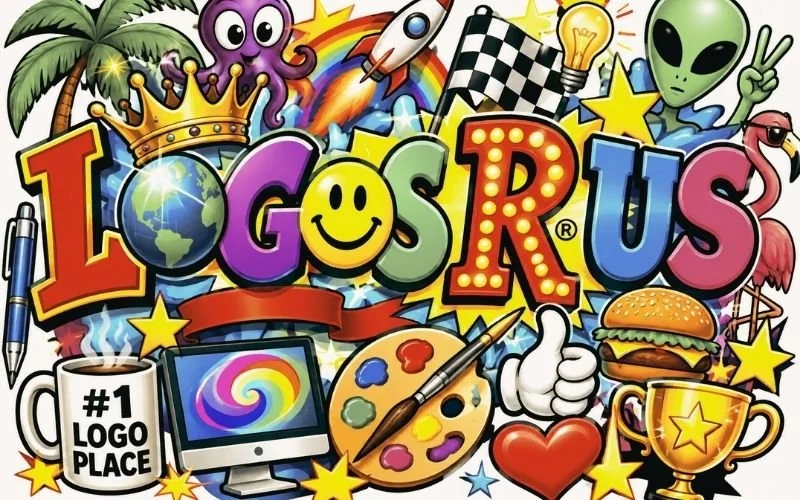
Yep, this is AI-generated, prompted to look tacky to make a point.
Additionally, AI generates your logo as a single, flattened picture, not scalable vector files (like SVG or Illustrator), so if you need that lovely logo to be printed larger than you downloaded from your AI source, you should make sure you’re not stuck when a vendor requests a format you don’t have.
When a professional designer (like myself) creates a custom logo, we use layers for the typography and vector shapes so we can move elements around easily. We include all file formats the client might need: jpg, png, ai, svg, tiff, etc., and, of course, a layered Photoshop file.
Alternatively, I have used AI to generate infographics for a client’s blog posts. They have a similar feel because that’s how I prompt, but I also identify these images as “AI-generated” in the caption.
To further attempt to dissuade you from using AI for everything, consider that AI-generated art might cause you and your client serious copyright issues and legal hassles if your “work” has a similar look to an already legally registered trademark.
TIP: Do a Google image search of your LLM-generated logo before you present it to your client (or your audience).
Professional designers charge more because we research your competition, the vibe you want to convey, and your target market (with the objective of avoiding potential copyright lawsuits)… and we also know how to build a file that will print correctly.
As much as I enjoy using AI (for specific uses, similar to how I use YouTube for both recreational and educational purposes), LLMs only use your prompted keywords when you request a generated logo, music composition, video, etc., without a grasp of your market, your direction, or whether you’re stealing from somebody else who has invested their time, experience, and skill into creating something original.
The Inevitable Bottom Line:
Just because it looks cool and no time or effort was invested, that doesn’t mean you’ll be safe from legal complications if you use it without attributing your efforts to whatever AI tool just saved you hours of time or, more importantly, any original creative input.
Keep in mind that anyone seeking a free and easy “custom” logo can “borrow” the AI logo you just sold to your client.
Here’s an idea:
If you really need to save time and get some concepts to your client ASAP, research first, then sketch your original concept, and then upload your sketch to your LLM with your original color palette, fonts, line weight, etc.; it feels more authentic and is certainly more ethical.
*LLM: Large Language Model, or AI, artificial intelligence
An expert eye without an agency price tag
That is precisely what Wallis Williams Design can help you with.